


Pet Pain Management: PRP Therapy



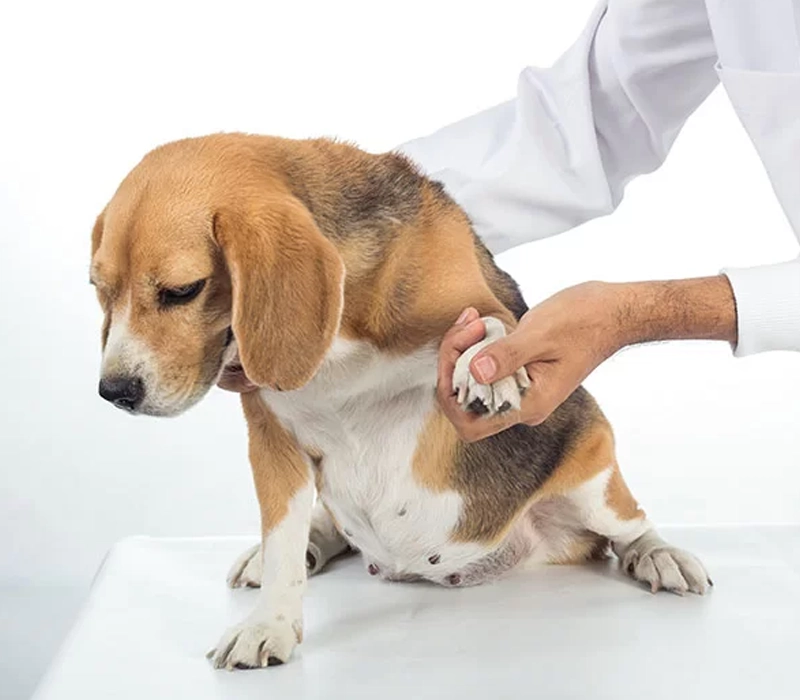
Regenerative Joint Injections for Pain Relief & Improved Mobility
Joint pain, arthritis, and mobility issues are extremely common in aging pets—and they can have a major impact on quality of life. At White Haven Veterinary Hospital, we’re proud to offer Platelet-Rich Plasma (PRP) Therapy, an advanced, regenerative treatment that uses your pet’s own cells to reduce inflammation, support healing, and restore comfort.
PRP is a safe, minimally invasive option for pets who need more than traditional pain medication and can be especially helpful for dogs and cats struggling with chronic joint disease.
What Is PRP Therapy?
PRP (Platelet-Rich Plasma) is a form of regenerative medicine that uses a concentrated portion of your pet’s own blood—specifically the platelets rich in natural growth factors—to stimulate healing inside the joints.
These growth factors help:
- Reduce inflammation
- Repair damaged cartilage
- Encourage new, healthy tissue growth
- Improve joint comfort and mobility
PRP allows us to target the underlying condition rather than only masking symptoms.

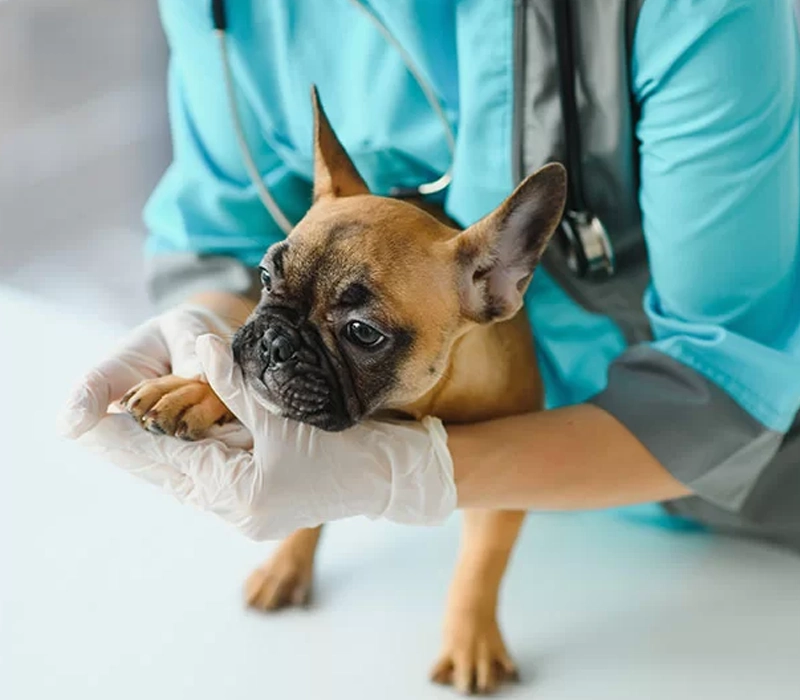
What Is PRP Used For?
The most common use of PRP therapy is for pets suffering from:
- Osteoarthritis
- Degenerative joint disease
- Chronic mobility issues
- Ligament strain or early joint degeneration
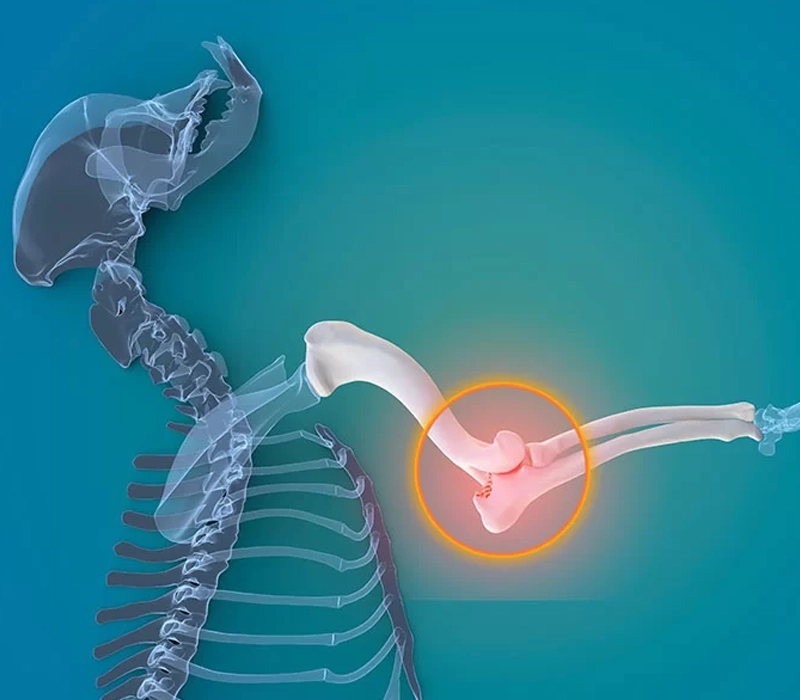
As cartilage wears down over time, pets experience painful “bone-on-bone” contact. PRP helps by improving joint function and slowing further deterioration—offering a more natural alternative to long-term anti-inflammatory medications.
Joints Commonly Treated With PRP
PRP injections can be used in many areas, including the:
- Shoulder
- Elbow
- Carpus (wrist)
- Hip
- Stifle (knee)
Most pets benefit from treating more than one joint at a time, depending on their condition.
What to Expect During PRP Treatment
Before determining if your pet is a candidate for PRP, we perform:
- Initial Screening & Diagnostics
- A full physical exam
- X-rays of the affected joint(s)
- Pre-sedation bloodwork
These steps ensure your pet is healthy enough for sedation and confirm that PRP is the appropriate treatment.
A Detailed Look at the PRP Injection Procedure
- Your pet is sedated to ensure comfort and precise placement.
- Blood is drawn from the jugular vein using sterile technique.
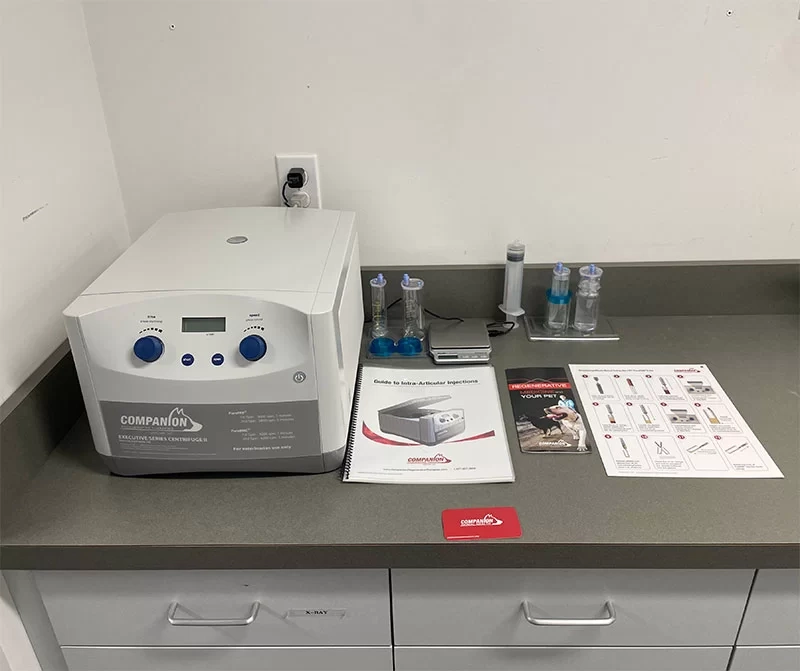
- The blood is spun through a specialized centrifuge twice to isolate the platelets.
- The joint is shaved, cleaned, and prepared.
- The concentrated platelets are injected directly into the affected joint.
- Your pet is monitored closely and then recovered from sedation.
After the Injection
- Pets may be sore for 48–72 hours.
- Results typically improve over several weeks.
- Relief commonly lasts 6–8 months.
Some severe arthritis cases may require a second injection two weeks later.
Pets cannot take anti-inflammatories for 10 days before or two weeks after treatment, but alternative pain medications can be used if needed.

Is PRP Right for My Pet?
PRP is ideal for pets who:
- Have arthritis or early joint degeneration
- Are not responding well to conventional pain medications
- Cannot tolerate long-term anti-inflammatory use
- Need additional support for improving mobility
- Are not candidates for orthopedic surgery
For pets with advanced joint damage, surgical options may sometimes be the best long-term solution. If your pet’s condition could benefit from surgery, our team will discuss those options with you.
To learn more about surgical care, visit our Veterinary Surgery page.
Schedule Your Pet’s PRP Therapy Appointment Today!

If your dog or cat is struggling with arthritis, stiffness, or chronic joint pain, PRP Therapy may offer the relief they need to stay active and comfortable.
To request an appointment, click here.


